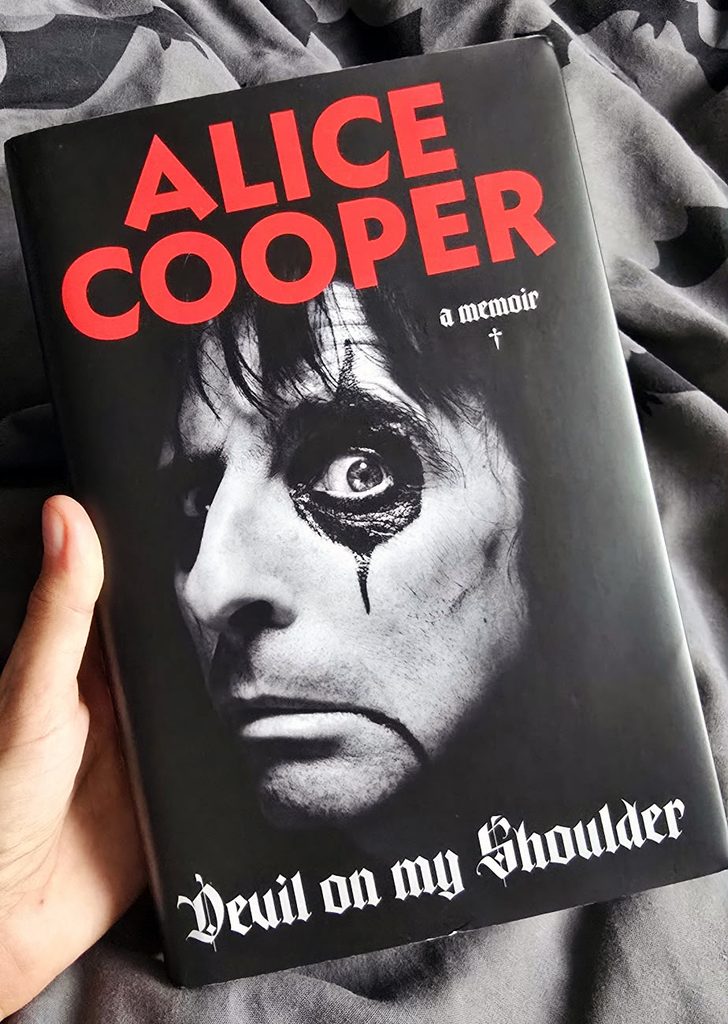
I have always found the idea of autobiographies a little funny in concept: talking about your life in a way that is engaging and interesting to readers, without compromising whatever image you’ve sought to curate across your lifetime. Can they ever be truly unbiased? No. But there is something fascinating about reading history told in the words of the person who lived it – and better still, tonight we get to hear it in person, too.
Alice Cooper (Vincent David Furnier), aka the Godfather of Shock Rock, has been a staple of our screens and speakers for six decades now. That’s a lifetime of stories, far too many to fit neatly into the pages of a book, so the chance to hear some of them straight from the horse’s mouth feels like a treat.
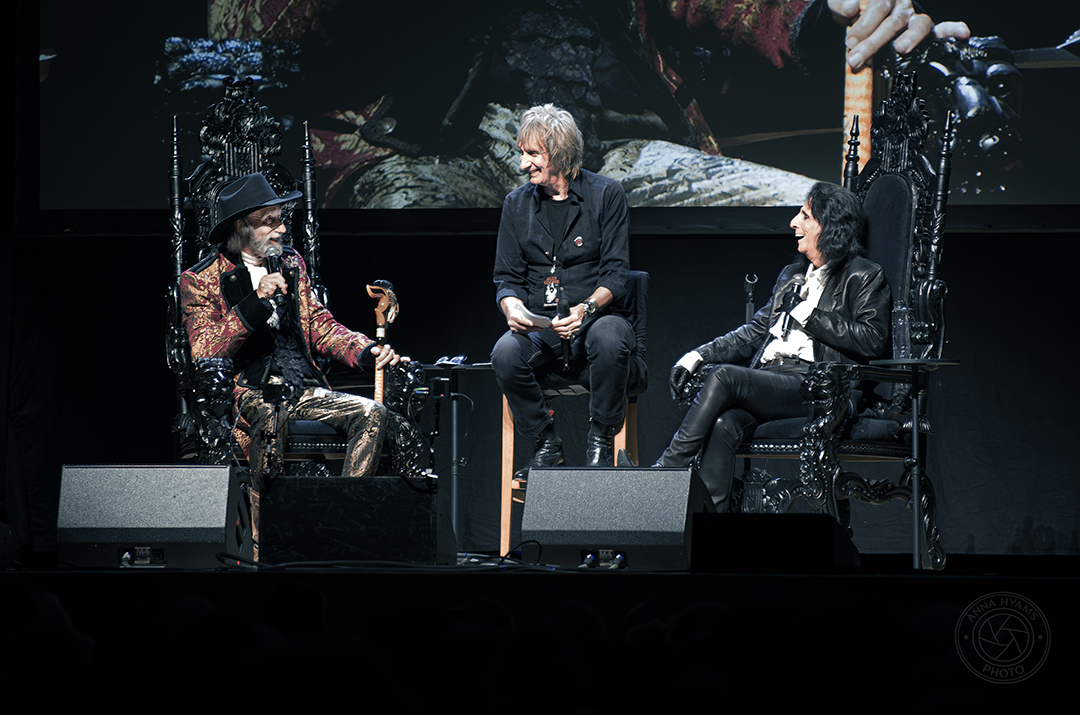
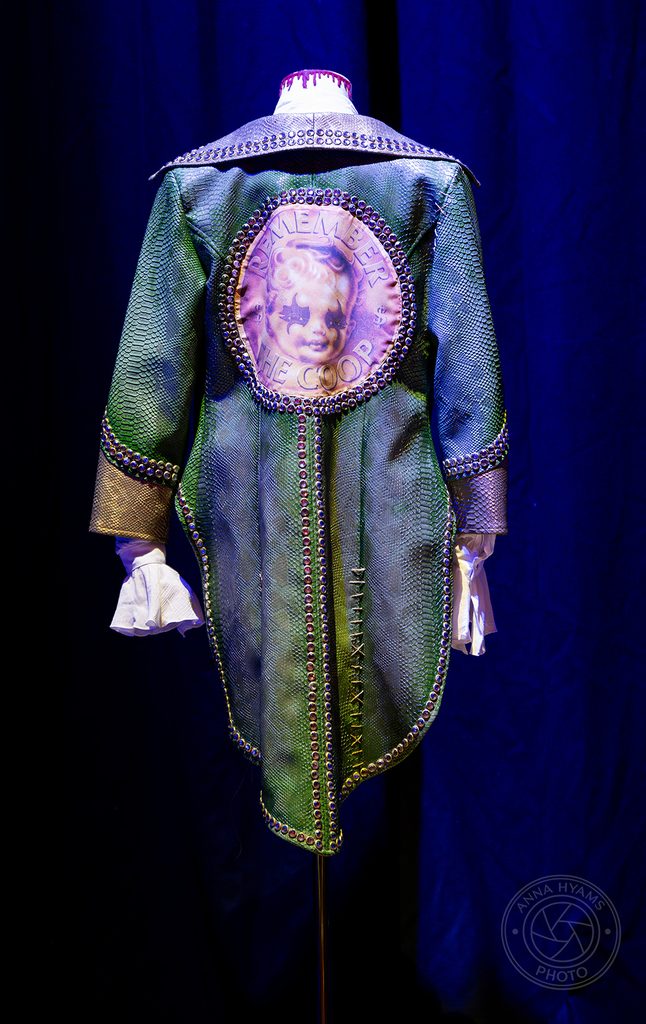
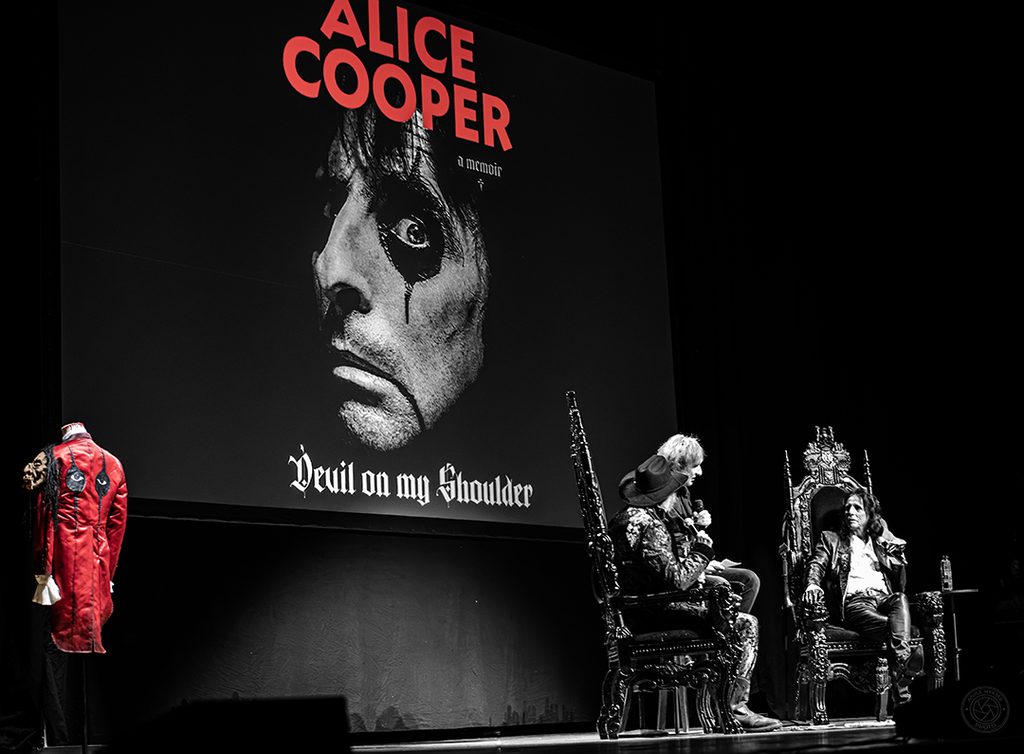
The stage at Wolverhampton Civic is bathed in eerie blue light, with two tall gothic thrones, a bar seat in the middle and a lectern off to one side. Four of Alice’s iconic touring jackets are displayed on tailor’s mannequins. It’s strange seeing them in still detail when I’m so used to imagining Alice swishing about the stage wearing them. Oh, how I would dearly love to don the blood-red one myself! A slideshow of photographs from the book plays in the background, taking us through some of Alice’s most iconic moments, alongside pictures of him as a young, kinda nerdy kid.
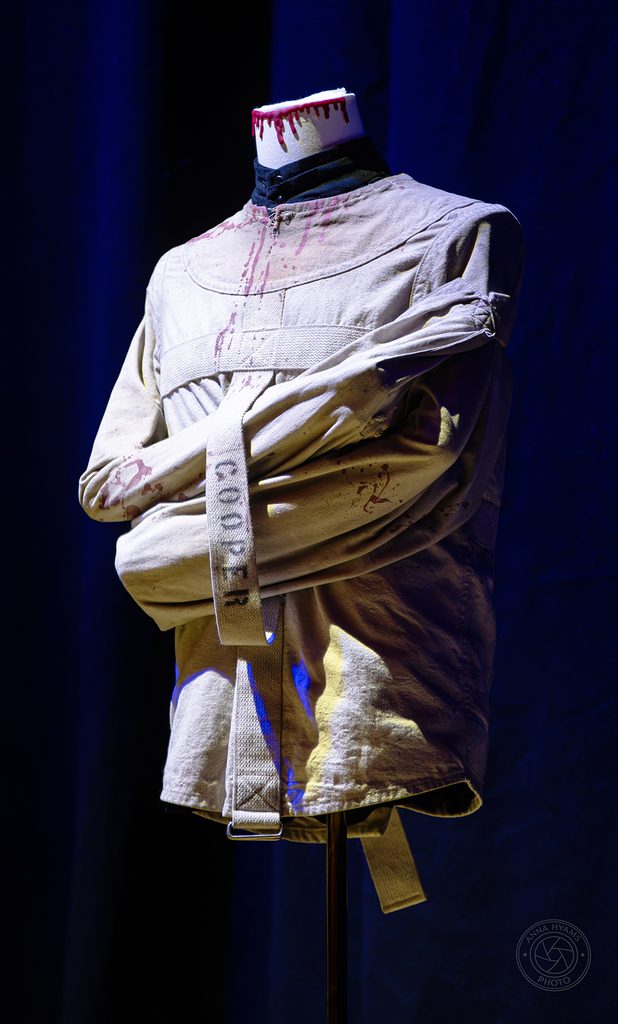
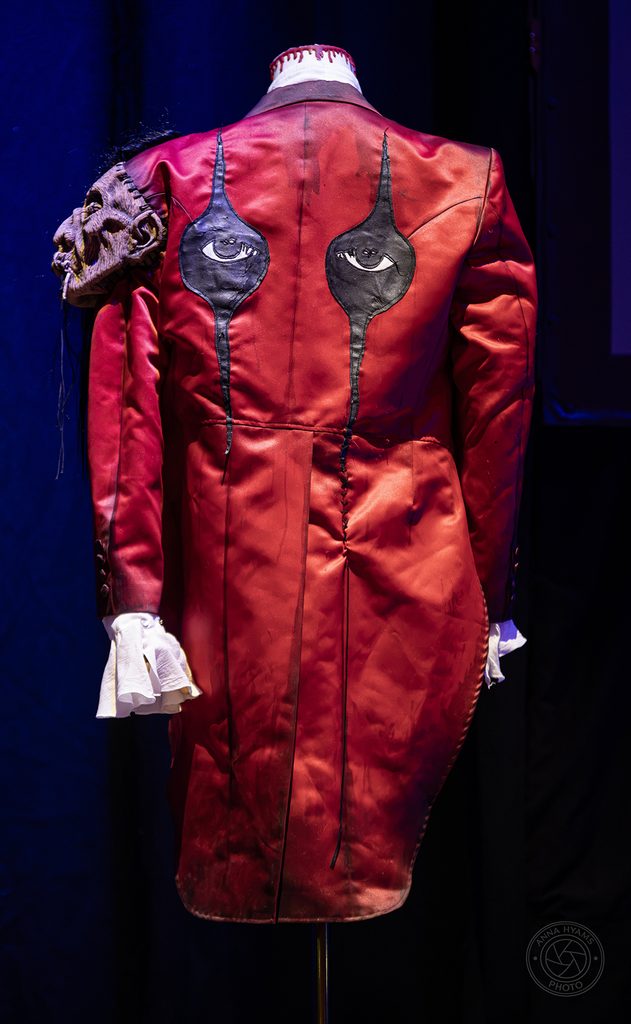
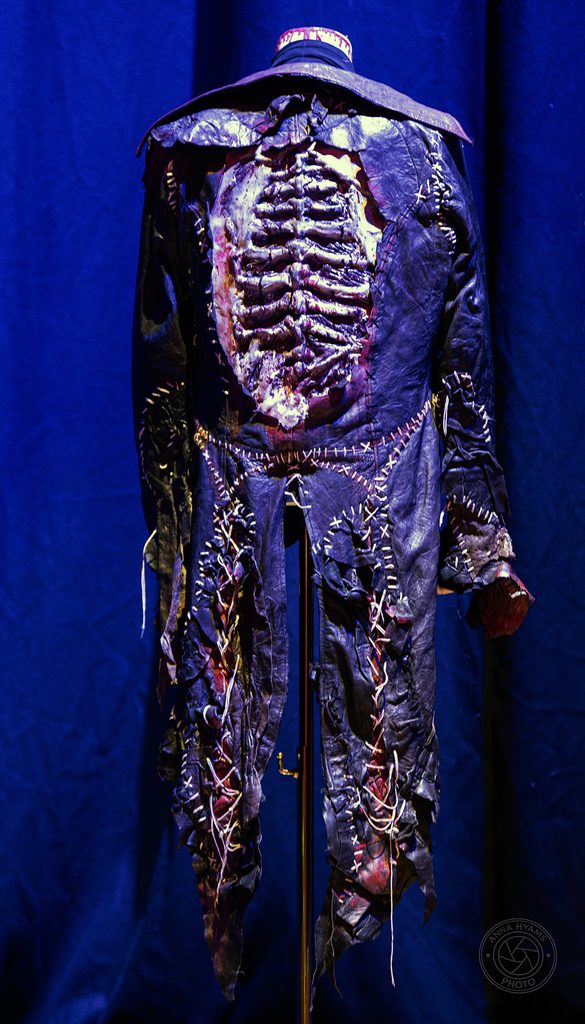
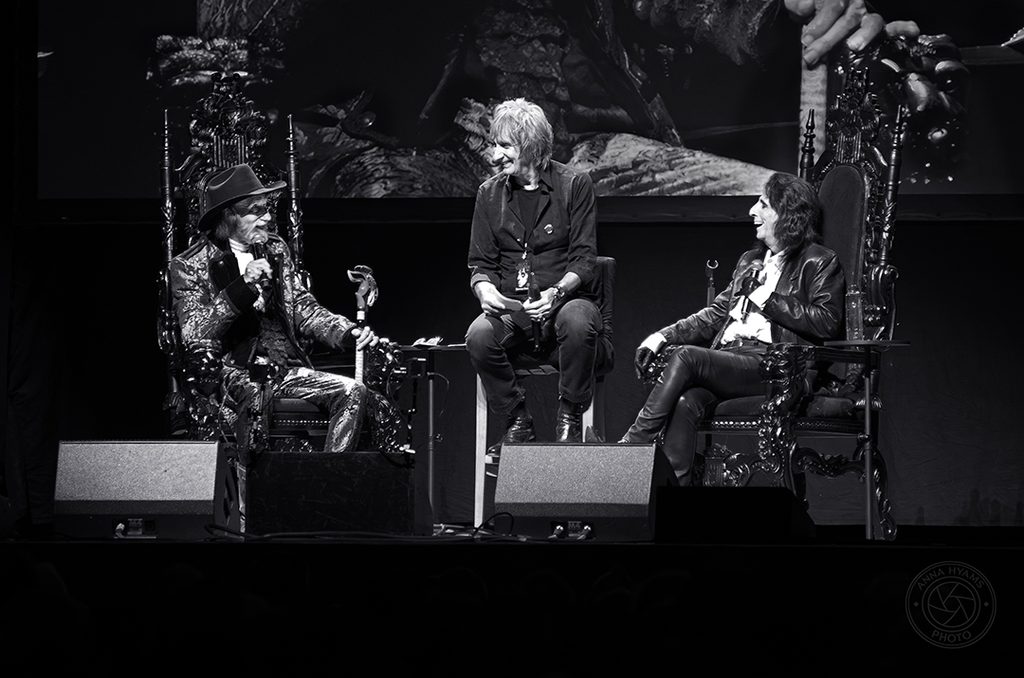
The evening is compared by co-author Daniel Richler, who worked extensively with Alice to unpack, sift through and fact-check the stories in the book – and given his own career in rock media, I imagine Daniel has a wealth of incredible stories too. Joining them on stage as guest mediator is the legendary Arthur Brown – the God of Hellfire himself.
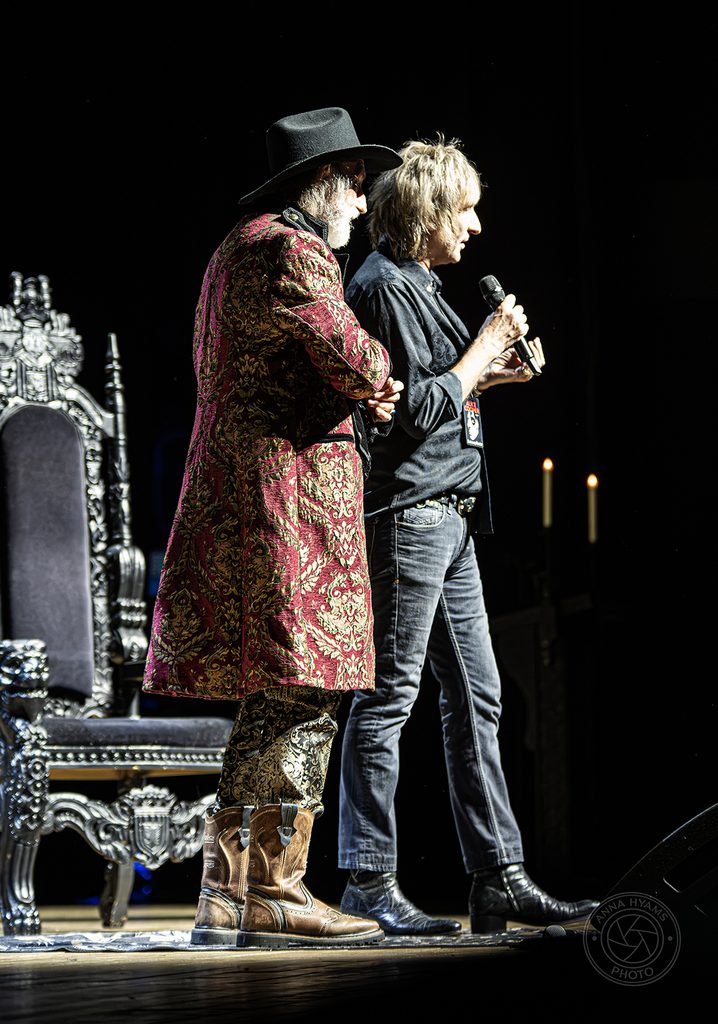
Arthur hails from Whitby (land of Dracula and goths, which surely makes for an excellent pipeline into rock music) and is best known for his iconic declaration, “I am the God of Hellfire and I bring you… FIRE!”, usually delivered with his head literally on fire. If you were born in the ’80s but were a fan of The Young Ones or The Prodigy, you’ll know exactly who I mean. Tonight, he’s dressed in a resplendent red-and-gold brocaded long coat, brown leather boots and hat, and carries the most incredible carved eagle-head cane. He looks exactly like I imagine Rincewind would look if he were on this mortal plane.
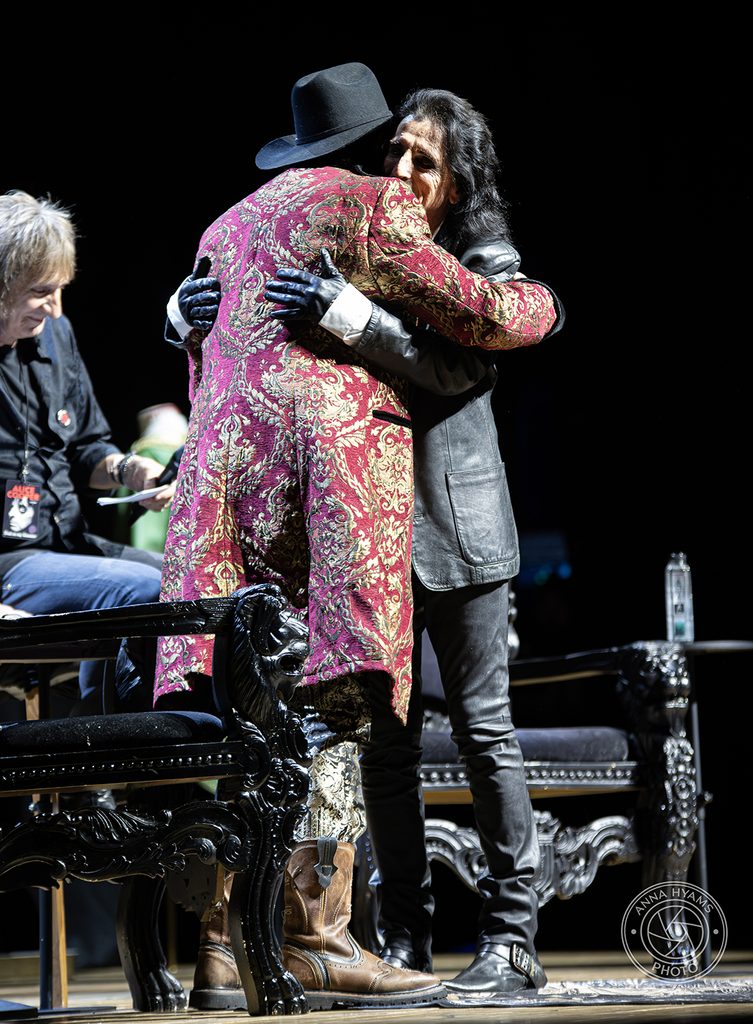
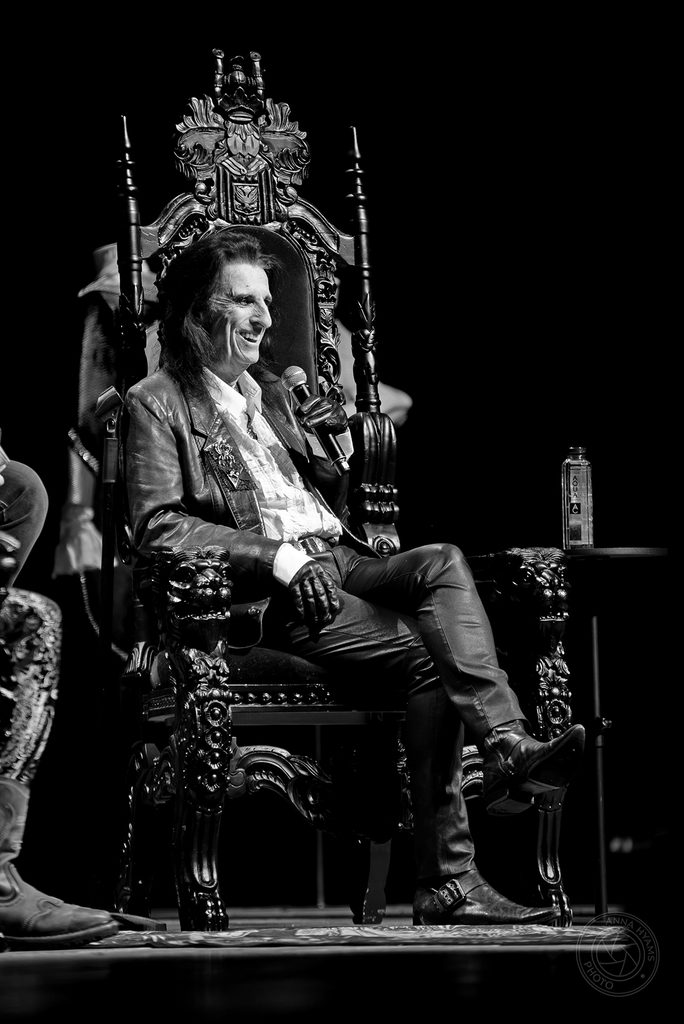
Alice is introduced to rapturous applause, wearing his signature combination of as much leather as possible over a frilly shirt, pointy witchy boots, half-hand leather gloves, jet-black hair and kohl-rimmed eyes. Iconic. The conversation begins with how he and Arthur first met, discovering that they shared both eye make-up and a love of stage stunts. “Oh, the guillotine – there was lots of crazy shit. I never set fire to my head, though. He did!” Alice laughs, pointing at Arthur.
Naturally, the conversation turns to one of the most controversial moments in Alice’s career: the chicken incident. “Ah, the chicken story, one of my favourites. So we were at the Toronto Peace Festival… that’s important.” There were around 30,000 people, and Alice’s band were playing between The Doors and John and Yoko’s first performance. He is keen to establish one crucial detail – “I didn’t bring the chicken.” Someone had thrown it on stage, and Alice assumed it would fly if he threw it back, “Chickens don’t fly as much as they plummet” he explains. He thought someone in the audience might take it home as a pet and call it Alice. Instead, the crowd tore it to pieces and threw it back on stage.
Alice describes how awful the experience was, particularly because he loves animals, and the next day’s headline announced, “Alice Cooper kills chicken, drinks blood”. When Frank Zappa later asked him at a hotel, “Hey, did you kill a chicken last night?”, Alice said no. Zappa’s response? “Well, don’t tell anyone. They love it.” An incredible photograph then appears on screen of Alice with Colonel Sanders, whom he met in Amsterdam a few years later. “Seriously, this guy’s killed six billion chickens and I’m the bad guy?!” Alice laughs along with the audience.
From there, the conversation moves into the art and cinema behind Alice’s shows. He and the original band members were friends and art majors at school, all obsessed with Salvador Dalí’s work, so they were thrilled to have the opportunity to work with him. “He was totally insane. He came to our show and saw it as surrealism. Then again, Groucho Marx thought it was Vaudeville.” Alice says that when people ask what it was like working with Dalí, he always replies, “I don’t know!”. Dalí believed that the greatest form of communication was chaos, Alice explains, and understood that he himself was the show.
They also talk about their shared friend Keith Moon, whom Alice describes as “the court jester of rock ’n’ roll, the best drummer I ever met, and totally insane”. Mae West and the film Sextette come up, along with the story of how she offered to sleep with Alice. He declined, only for Moon to later point out, “…of course, how many chances do you get to sleep with Mae West?!” Arthur recalls another encounter with Moon, who got him so high before a performance that Arthur struggled to make it on stage, fell down a trapdoor and had absolutely no idea what was happening. I will never tire of hearing these sorts of stories, that remind me that my idols are in fact still just humans, living this weird life as it comes to them too.
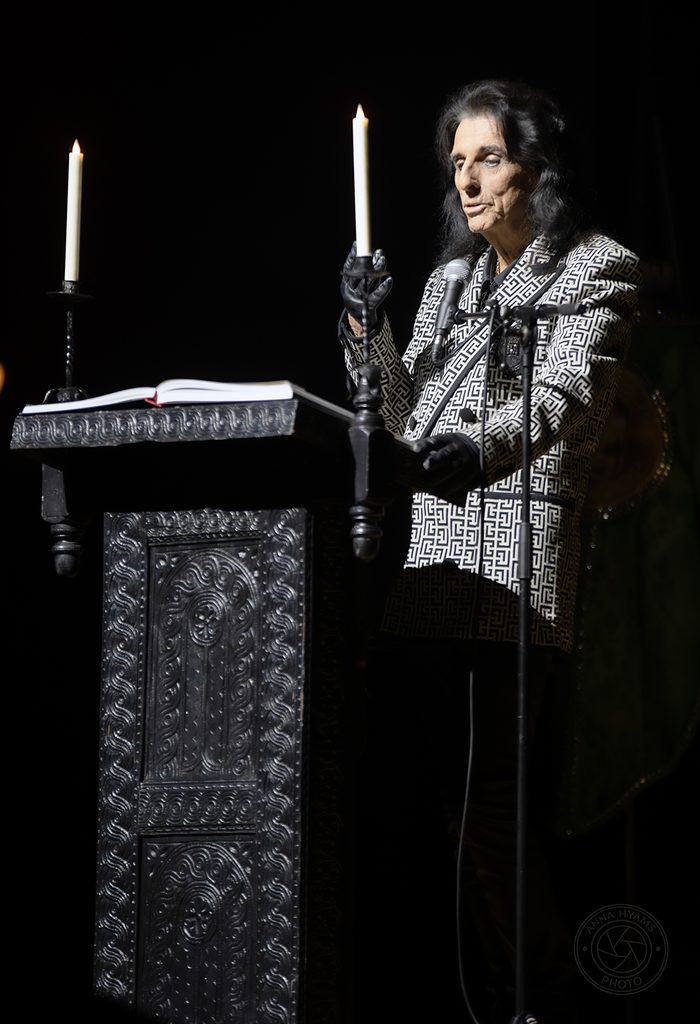
At the interval, we bid farewell to Arthur, and resume with Alice standing at the lectern to read an extract from the book. He’s funny and articulate, reminding me of the perfect juxtaposition that was employed in the Wayne’s World movie – between villainous stage-Alice and dressing-room Alice who was interested in history, which turns out was actually just a spot-on character assessment and not a mere comedic plot point.
Alice’s wife Sheryl is then invited on stage to say hello. They proudly show off their wedding rings and gush about having recently renewed their vows. “I’m still besotted, and he still pursues me as though he doesn’t have me” she says. She tells the story of how they met when she auditioned to join his show, having been part of the Joffrey ballet. Dressed in a feathered hat and a long, autumnal skirt, she looks like a boho princess, and it’s a sweet glimpse of the relationship behind the stage persona.
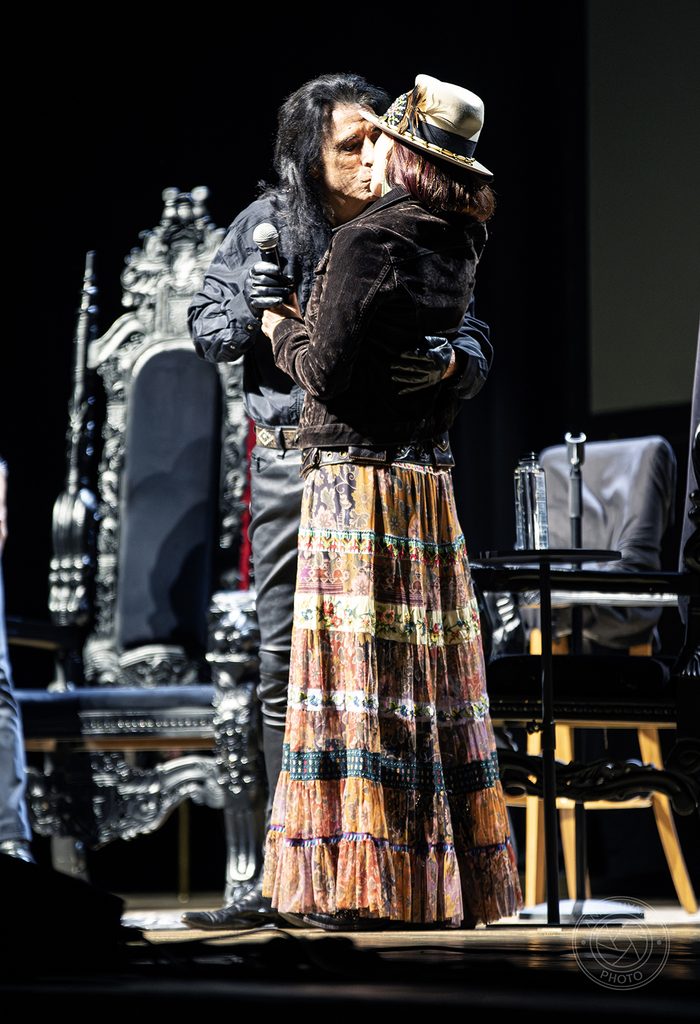
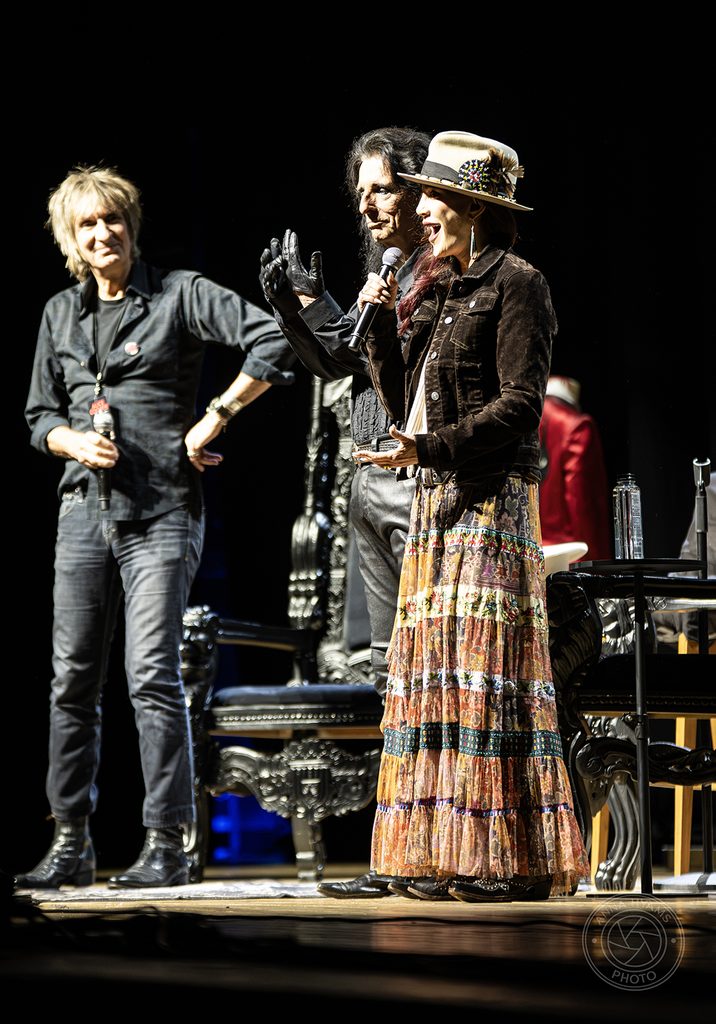
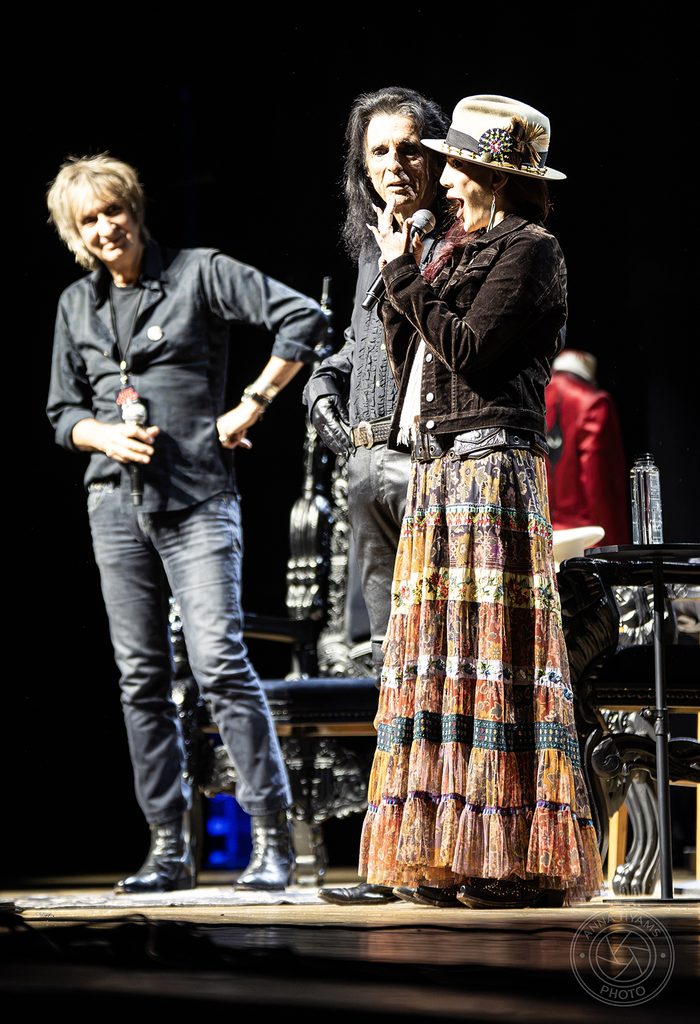
Once she leaves the stage, Alice and Daniel return to the props that have helped make his shows so infamous, including his famous Errol Flynn sword, used in The Adventures of Don Juan. Alice jokes that everyone in the band has stitches resulting from his swordplay, and that he always warns new recruits: “You’re gonna get paid, you’re gonna see the world, and you’re gonna get stitches.”
Nita Strauss played for ages before finally getting cut. When it happened, she apparently said, “Yesss, I get my stitches, I’m in the band!” It’s a suitably gruesome badge of honour for being a part of an Alice Cooper show I guess.
The conversation then turns to Alice Cooper the character. Daniel recalls Alice describing their relationship as a wrestling match with his alter ego, to the point that he would check into two separate hotel rooms. Alice confirms it: one room for him, one for Alice. “I like Alice, though. I invented him to be my favourite rockstar.” It’s a funny way to describe the separation between the man and the larger-than-life figure he created, and one that makes the whole idea of the autobiography even more intriguing.
Next comes the audience Q&A, with questions drawn from the white top hat used in the show. Asked about the strangest thing a fan has ever done to scare him, Alice talks about how his fans have often been outsiders who never fitted in. In Los Angeles, two girls who looked like witches once left a box at his front door, and inside was a cat’s heart, which Alice immediately took to the police. “Not cool at all, it was really disturbing. I love animals.”
In another weird incident in Connecticut, someone left a tombstone leaning against his front door, belonging to two dead twin babies, that had been dug up from the local cemetery. At the time, the band lived on the Galesi estate, where their neighbour Bette Davis was apparently the real terror of the town. She would drive past and yell, “Turn that damn music up!”.
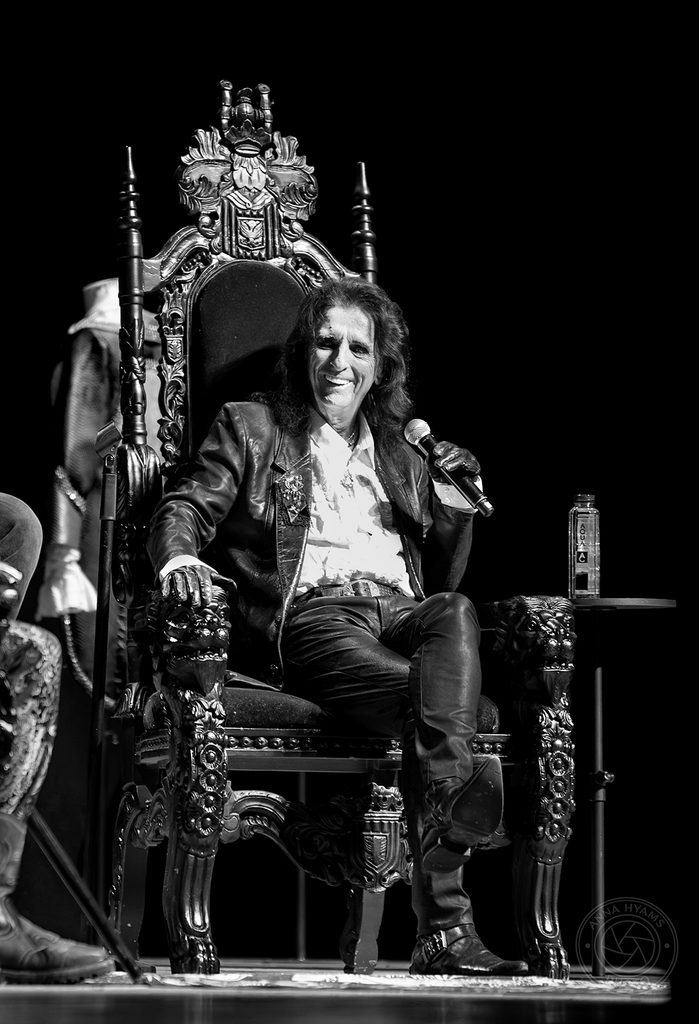
The next question comes from Ted Harris: “Are we worthy?” Alice points to someone in the audience and says “…that guy is!” and launches into a story about appearing in Wayne’s World.
He already knew Mike Myers at the time who had casually said “You perform, you can handle a few lines, right?” before handing him five pages of dialogue. Alice asked how long he had to learn it and when they were shooting – “Ahh, in about five minutes” came the reply. To make matters worse, Mike and Dana Carvey were apparently below him trying to make him laugh throughout the ten minute monologue he had to record. “It was vile. I would not laugh, though!”
He adds that the Wayne’s World reference happens all the time at airports, where he has to pretend the joke is new. “Oh, that’s so clever, haha” he coos jokingly. This is especially funny to me, as Alice did a press conference at Download Festival one year and I had actually had asked the question of ‘How often do people come and do ‘We are not worthy’ to you in real life?’. I suppose he will never outlive the accolade!
The next question from Alan Golding, asks about DaDa, his favourite Alice Cooper LP, and whether Alice avoids playing it because it brings back bad memories. Alice admits that he doesn’t really remember making it. “During the Los Angeles blizzard of 1978, cocaine was everywhere” Alice says quite somberly, “When you’re doing cocaine, you could rule the world”. He goes on to explain that he continued making albums but remembers very little of that period. He likes the songs, though, and feels that few of them would work on stage, with “Former Lee Warmer” perhaps being the exception – that could have been an entire show.
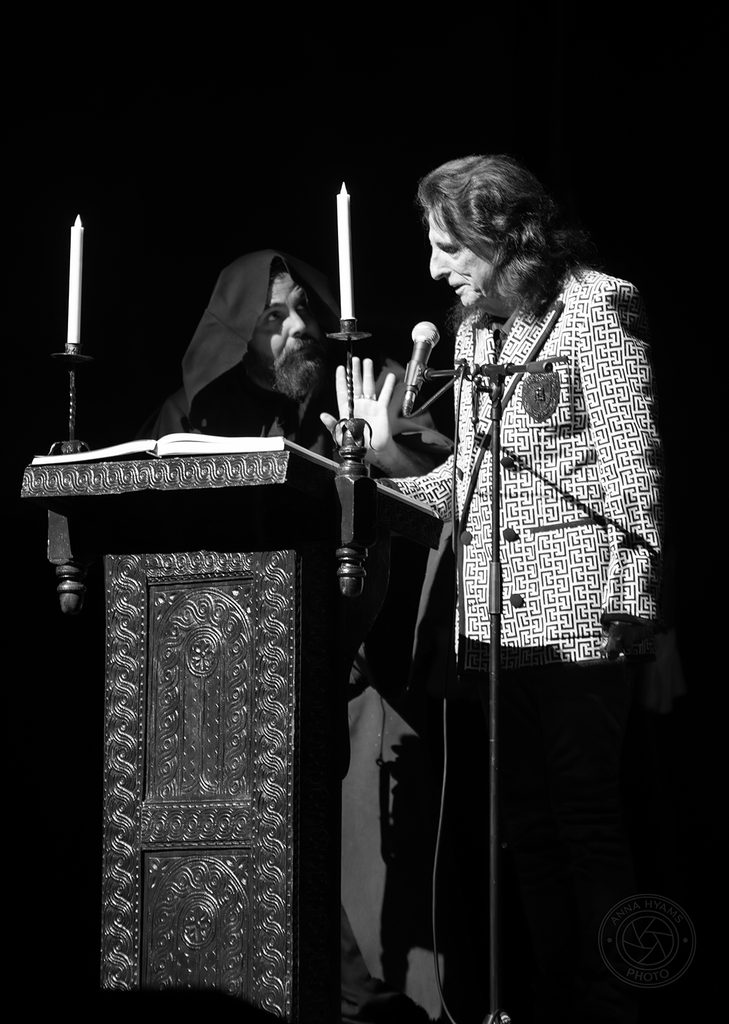
Although there had been two previous biographies, Alice says this is the first time he has spoken so openly about his past drug use – previously, including it had felt stereotypical and embarrassing. “I was very much on my way to being in the 27 Club. All my friends were in it. Now it just feels silly to pretend it didn’t happen.” It’s a strikingly candid moment, and one of the points where the light-hearted stories give way to something more serious.
He also recounts being in a New York sanatorium in 1977, where he was the only patient there for alcohol abuse; everyone else, he says, was insane. He became friends with an 85-year-old man called Ben and told him, “I’m going home tomorrow.” Ben replied, “I’m proud of you! Some day I’m gonna get out too… and when I do… I’m gonna kill you.” Alice pulls a mock frightened face before delivering his own response: “You know, Ben, I love you, but I hope you never get out”. Alice is a wonderful storyteller in person, with great comedic timing, I’m so interested to see how this is translated onto the pages of this book.
That period also led to the album From the Inside, apparently Alice rang Bernie Taupin when he left the asylum and told him, “I’ve got a plethora of characters.” – one of which was Nurse Rosetta, played in the show by his wife Sheryl. It’s fascinating to hear how experiences that were difficult and painful at the time could eventually become material for the music and theatre.
The next question asks what Christmas looks like in the Cooper household, and what the best gift he has ever received might be. Alice practically gushes about his love for Christmas, particularly when it comes to his four-year-old granddaughter, Desiree. She calls, “PopPop?” and he replies, “Anything, what do you want?”. One thing that comes across throughout the evening is how warmly he talks about the people in his life, that family, friends, and people in general are everything to him.
Alice goes on to explain that Christmas at the Cooper house takes three hours just to open the presents. With five grandchildren and three children, there are a lot of gifts, and Alice admits that he overdoes it, and has even started his Christmas shopping here in the UK, because he likes buying things from the places he visits. The day after Christmas, the whole family flies to Maui for two weeks. “Total chaos. It’s big for me, I love it.” As for ‘Best Gift’ he fondly remembers his own father buying him a Michigan Wolverines helmet when the family had absolutely no money, leaving Alice wondering how on earth his dad had afforded it.
His children, it seems, share his dark sense of humour. His daughter Calico once bought him a flat, roadkill-style Wile E. Coyote bath mat, and the family have a tradition of making and sending each other disgusting videos every year. Alice recalls titles including “Mons-turd”, “Velocipasta” and “Summer Bible School Massacre”.
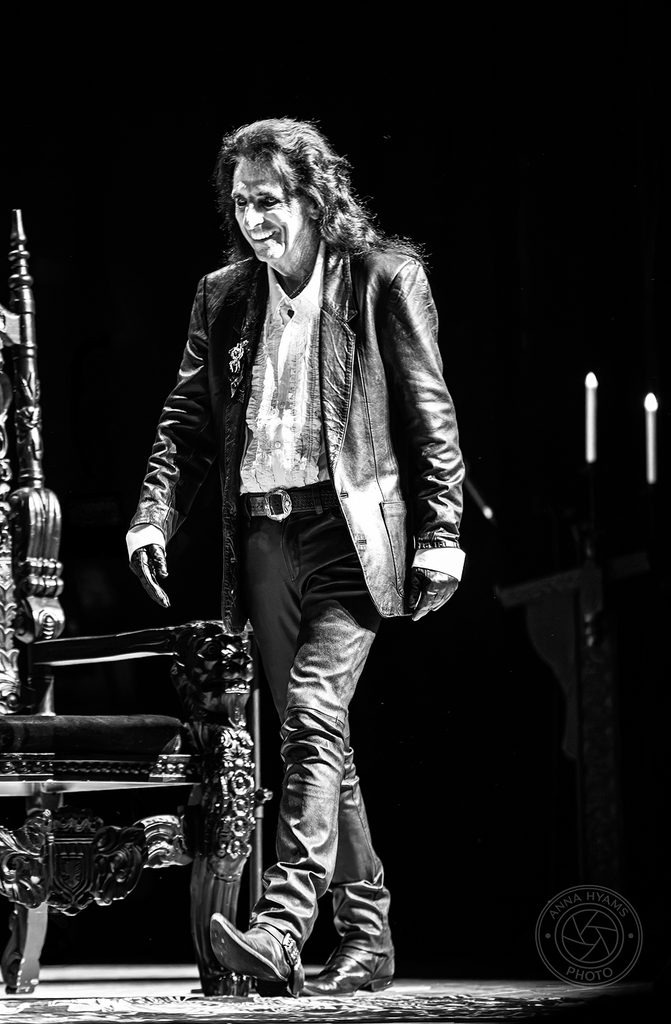
Snakes, a regular feature of Alice’s shows and photoshoots, are the subject of another question. Over the years, he says, they’ve had some excellent names: Cobra Winfrey, Julius Squeezer and Shed Bundy. One snake, Yvonne, was kept in the bathtub at a hotel and then mysteriously disappeared. There was no lid on the toilet seat, and she ended up in the plumbing for two weeks before emerging through the toilet of country singer Charlie Pride. A huge snake in the plumbing for a fortnight is already a nightmare scenario; discovering where she eventually resurfaced makes it even better.
Asked about his biggest guitar influences, Alice says he surrounds himself with the best, naming Ryan Roxie and Nita Strauss, as well as Steve Hunter, who “could play anything”. He speaks particularly fondly of Glen Buxton, saying he was like no other and that they couldn’t put the band back together without him. Buxton died at just 49, and there’s a clear note of affection in Alice’s recollection.
A question about a chaotic career moment that makes him laugh now brings up a Lenny Bruce memorial birthday party in Los Angeles. There were 3,000 people, all tripping and seeing rainbows, when Alice and the band came on with uplighting and smoke. They cleared the room in three songs. “We were a bad trip” he laughs. Zappa’s response was apparently, “I gotta have these guys.”
Then we move onto stories about some of the things that have gone wrong on stage during his career. There was a cannon routine in which Alice would climb inside, escape through a side hatch, and a dummy would be fired across the stage in his place. It worked two or three times, then failed, leaving the dummy to plop out and hang there. Alice came back on, kicked it and made a joke of the whole thing. He sold the cannon to Mick Jagger the next day.
Following this, there’s the infamous gallows prop built by Warner Bros. It used a hidden piano-wire harness designed to stop Alice an inch from the noose, but no one had considered that piano wire could get old. During a Wembley rehearsal, he dropped eight feet to the floor and only escaped serious injury by snapping his head backwards and slipping out of the noose. This did not put a stop to the act: they simply fitted a thicker piano wire and carried on with the show. Alice also recalls the guillotine, which remains a little nerve-racking because, as he points out, “it’s a real knife”. The commitment to theatrical spectacle is impressive; the health-and-safety implications are rather less comforting.
The final question asks how he balances being a church-going Christian with being a blood-spattered villain on stage. “Well, there’s nothing satanic in my show” he says quite plainly. “The Lord never said you can’t be a rock ’n’ roller” receives a round of applause. Alice explains that his experiences have also given him a platform to talk to teenagers about drugs and alcohol, and subsequently he opened three teaching centres offering free music, ballet and other activities for youths. Alice Cooper’s Solid Rock Teen Centres, which he is keen to make clear – are Christian non-profit organisations rather than churches. He also mentions a success story – Jordin Sparks, the former American Idol winner, who took part in one of Alice’s youth music competitions as a child.
It feels like a lovely way to round out the conversation. The evening has moved between light-hearted absurdity and some genuinely dark memories, offering a fascinating insight into the history of Alice Cooper without losing sight of the person behind the character. There is humour in abundance, but also real honesty about addiction, memory, friendship and the experiences that shaped him. I leave even more curious to delve into the book itself.
Overall, it feels like a really special event: nicely organised, full of great stories, and with the added bonus that everyone gets to take home a book. There’s even some Alice’s Attic merchandise – from his radio show – available to buy on the night. For an evening built around a lifetime of outrageous stories, it’s a surprisingly warm and intimate experience, and a reminder that behind the blood, leather and theatrical mayhem is a man with a remarkable history to tell.